
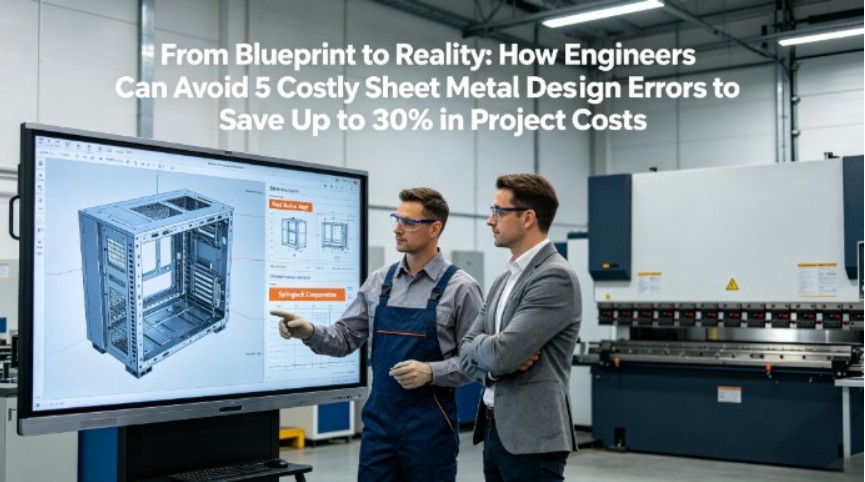
With the increasing pace of new products being developed, a lot of engineers and product designers have discovered that even with perfectly created 3D models, sometimes when it comes to the manufacture of the sheet metal parts, there will be problems with measurements, difficulties assembling, or poor performance of the product.
While it might seem like the problem would lie with a low quality level of manufacturing, more often than not it has nothing to do with it. The real problem lies in the lack of necessary information between the two phases, and the traditional approach “design, hand off, produce” lacks initial cooperation on materials, processes and quality standards, which makes it possible for mistakes to show up during trial manufacture. This article highlights five common sheet metal design mistakes and prevention methods based on industry best practices.
Why Do Sheet Metal Projects Fail to Deliver Precision Expected of Them?
Most sheet metal projects fail not because of poor machining but due to the mismatch between what engineers expect when designing products and what actually happens in reality. Knowing that mismatch is important since it will help achieve accurate and affordable results.
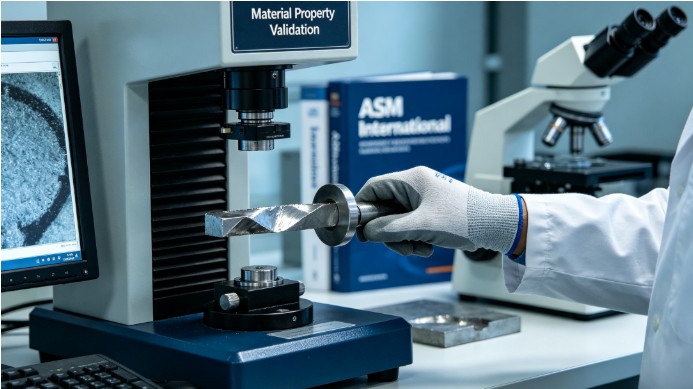
- Basic Conflict Between Expectations and Reality: Often times, engineers design products without properly taking into consideration how real metals behave when they undergo processing. For example, springback can result in the angle deviation up to 2-5 degrees, while the minimum bend radius will differ depending on material and its thickness. Defining the radius lower than the metal can allow results in cracking or weakening flange. This information about materials and how they behave is widely available in authoritative sources such as the ASM International handbooks. They contain data on the tensile strength and elongation properties for all popular alloys.
- Accumulating Tolerances Over Multiple Processes: In sheet metal fabrication, cutting, bending, forming, and welding operations each add their own tolerance. Without a tolerance stacking analysis, the total tolerance error could be beyond the acceptable level. For instance, a chassis designed with four mounting holes, located within ±0.2mm from each other, can result in a maximum of ±0.57mm along the diagonal — a distance enough to misalign parts when assembled. This is where DFM in sheet metal can come in to save you the trouble.
- The “Design First, Then Fix” Approach Fallacy: The old-school approach of designing the product and passing it to your manufacturing partner afterward is a very wasteful one. Implementing the required change later on in the process, either at tooling stage or pilot production, is 10-100 times more costly than making a design change earlier. That’s why the most progressive businesses collaborate with their manufacturing partners in DFM during the early stages of the product development process. In doing so, designers can make sure that no mistake in the product design is being repeated.
What Are the Most Important Considerations in Material Selection for a Custom Sheet Metal Part?
Material selection is perhaps the most important step in designing a sheet metal product, impacting the performance of the part and its manufacturing costs. Applying a methodical process ensures that the choice of material will result in an optimal fit.
1. The Material Selection Matrix: Finding the Balance between Performance and Cost
There are several conflicting factors when it comes to selecting an appropriate material: formability and rigidity, corrosion resistance and ease of processing, weight and cost. To illustrate, Aluminum 5052-H32 is one of the best options where performance and corrosion resistance are key. On the other hand, the Stainless Steel 304 material combines high performance and good looks at a cost, being rather difficult to process. Cold-rolled steel SPCC can be cheaply formed yet requires special treatment to prevent corrosion. The sheet metal material selection guide assists engineers in creating the selection matrix.
2. Validating Material Performance with Industry Standards
When you have settled on a material, its performance can be validated using various industry standard tests. In the case of parts that will come into contact with corrosion-inducing environments, the ASTM B117 salt spray test would be helpful in evaluating the quality of the coating or plating applied on the material. If you seek custom sheet metal fabrication services, including such test requirements in your technical packages will ensure that you get parts that match your intended durability criteria.
3. Common Material Selection Errors to Avoid
There are three errors people often commit in the course of material selection. The first one is over-specification, which entails selecting an alloy whose cost outweighs that of a cheaper yet suitable alloy. The second is under-specification where the selected material is incapable of withstanding the environment in question. The third error has to do with supply chain limitations. Working with a reputable custom metal fabrication services company will help avoid these errors.
In What Way Does Having Quality Certification Make a Difference to a Manufacturing Partnership?
Quality certifications are more than mere symbols; they represent an organization’s commitment to having a quality culture within their manufacturing processes. When one understands the meaning behind these certifications, it makes the choice of manufacturing partners much easier for the engineers.
1. ISO 9001: The Building Block of Process Control
The fundamental component of a Quality Management System (QMS) is ISO 9001. Established by the International Organization for Standardization, the standard outlines the necessary QMS requirements and a strategy for continual improvement through documented processes such as document control purchasing manufacturing, inspection, and corrective actions, among other things. So, the provider of precision sheet metal fabrication services who are in compliance with ISO 9001 must ensure that every process is controlled, reviewed, and documented. This way, consistent quality and delivery should be reflected in every manufactured piece.
2. IATF 16949: Additional Rigor for Automotive Applications
The additional level of rigor offered by IATF 16949 requires the use of APQP (Advanced Product Quality Planning), FMEA (Failure Mode Effects Analysis), MSA (Measurement System Analysis), and PPAP (Production Part Approval Process). All these tools are designed for preventing defects rather than detecting them. If a supplier is certified under IATF 16949, it means that he/she/they are capable of risk management and can produce products with zero defects.
3. The Concrete Advantages of a Certified Partner
There are concrete advantages to choosing a partner that is certified. This can include less incoming inspection due to trust in the process, fewer disruptions in the supply chain as their processes are sound, and ease of regulatory compliance due to documentation according to international standards. Choosing a partner that holds ISO 9001 and IATF 16949 certifications will be beneficial for any engineer managing a complex project.
What Is the Function of Surface Finishing in Improving Parts’ Performances and Lifespan?
Finishing processes are frequently considered only a secondary issue, but they are important factors influencing such part characteristics as corrosion resistance, longevity, aesthetics, and performance. Selecting the proper finish is vital because both the process itself and its effect on the part should be taken into consideration.
1. Anodizing: Corrosion-Resistant and Colorful Finishing of Aluminum Parts
Anodizing is an electrochemical treatment forming an oxidation layer on the surface of aluminum. Being an integral part of the material, it is impossible to peel or chip off this coating, providing excellent resistance to corrosion and wearing out. Another great advantage is that anodic layers accept any dyes, allowing for a wide range of colors. The nature of the process is described in details at the Wikipedia page dedicated to Anodizing. Sheet metal finishes that should be used for aluminum parts include anodizing.
2. Powder Coating: Resistant and Highly Functional for Steel
Powder coating utilizes dry powder that is applied electrostatically and cured via heating to create a strong layer. The impact and chip resistance of the process is better than the one offered by liquid paint, while the availability of any colors and textures allows for customization. With regard to the steel enclosure and frame surfaces, the process gives good protection against corrosion if applied after proper preparation of the surface. In terms of powder coating vs anodizing controversy, powder coating applies to both aluminum and steel.
3. Measuring the Performance of Surface Finishing: ASTM Testing
The performance of the surface finish in question must be tested according to some standards. As a rule, corrosion resistance can be evaluated with the help of ASTM B117 salt spray test. If the surface finish can resist 500 hours of salt spray exposure without red rust or blistering, its corrosion resistance is good enough. Thus, specifying the performance criteria in your technical documents is very important.
How can a strategic partnership help in the streamlining of the process of getting from a prototype to production?
There is no doubt that moving from a few prototyped pieces to thousands of units of production is very tricky indeed. But if one works strategically in cooperation with the provider of an end-to-end manufacturing, all the above-mentioned issues are easily solved.
- The Agony of Fragmented Supply Chain: Fragmented supply chain means the need to coordinate work of separate providers in charge of prototyping, tooling, manufacturing, and finishing. In case any changes in the initial design occur, one has to deal with three different providers, each having his/her own deadlines and requirements. This fragmentation is the key issue behind the notorious “death valley” that many prototypes encounter.
- The Integrated Partner Model: The perfect partner will have an end-to-end solution which includes feedback for design via DFM, prototyping to validate design, manufacturing tools, manufacturing ramp up, and surface finishing as well as assembling. By using this model, you will get a streamlined design process and communication. If you are interested in learning more about this concept, there is a detailed technical guide called sheet metal fabrication services which covers how end-to-end collaboration will help reduce supply chain risk and expedite time-to-market.
- Virtual Case Study: 30% Faster Time-to-Market: An engineering company sought a high-strength aluminum chassis to house its diagnostic equipment. By the traditional multi-vendor method, the delivery time was estimated as 20 weeks. Collaborating with an integrated manufacturer, they immediately received a design-for-manufacturing (DFM) analysis that not only reduced design complexity also saved 15% on parts. Prototypes were delivered in 2 weeks while production scale-up commenced in week 6. Overall, time to market was shortened to 14 weeks or 30% faster than initially expected. This case illustrates that good collaboration can make sheet metal fabrication for custom parts a pleasant and efficient experience.
Conclusion
Success with customized sheet metal fabrication is not a matter of luck; it takes knowledge and expertise in materials, engineering, quality requirements, and the fabrication process. The key takeaway from the five mistakes considered above is simple: the sooner manufacturers’ knowledge is incorporated into the design, the lower will be associated risks and costs. It means that selecting a manufacturing partner with a broad range of competencies and quality control system is vital to the process.
FAQs
Q1: What is the most common mistake in sheet metal design?
A: Springback and minimum bend radius tend to be the most commonly overlooked material properties when designing a sheet metal part. Sheet metals not designed to consider springback might not fold at the right angles. You need to know the material properties of the selected material.
Q2: When should I use aluminum and stainless steel in sheet metal fabrication?
A: The choice depends on what features you expect of the metal part after fabrication. For example, aluminum is very light, easy to handle, and has good heat conductivity. Stainless steel But offers very high strength and outstanding resistance to corrosion, but is more expensive than aluminum.
Q3: Why does my sheet metal manufacturer require a DFM review?
A: One of the reasons could be that you have not designed the part to be friendly for efficient manufacturing. You should consider such factors as wall thickness, the location of holes near the edges, bend reliefs, and other crucial features.
Q4: What does ISO 9001 mean to the supplier of sheet metal?
A: For a supplier to be ISO 9001 certified is a recognition that their Quality Management System (QMS) is top-notch. This means that all their processes from design to manufacturing and testing are documented and can be checked for compliance.
Q5: Is it possible to get a prototype before production?
A: Absolutely. The majority of respectable sheet metal fabrication companies are capable of creating rapid prototypes. This will allow you to make sure your design works before spending money on tools.
Author Bio
The following article is presented by an expert senior engineer who has more than 15 years’ worth of experience working in precision manufacturing. The author represents a company that strives to provide end-to-end solutions for global innovators from prototypes to production. LS Manufacturing has expertise in converting intricate engineering blueprints into tangible products using state-of-the-art equipment and strict quality control processes. Engineers who need help finding a suitable manufacturing partner or even getting a DFM consultation can begin their journey by learning about the benefits of having a stable manufacturing partner that produces high-precision sheet metal parts.